

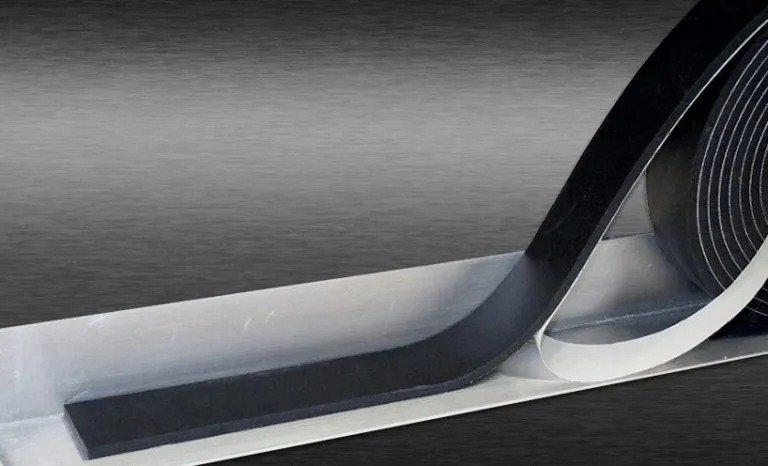
PE Foam Tape and EPDM Foam Tape are two popular sealing materials used in industrial, automotive, and construction applications. While PE Foam Tape is lightweight and cost-effective for indoor use, EPDM Foam Tape offers superior UV resistance, weatherability, and long-term outdoor durability.
This guide compares their differences, applications, advantages, and how to choose the right foam tape for your project.
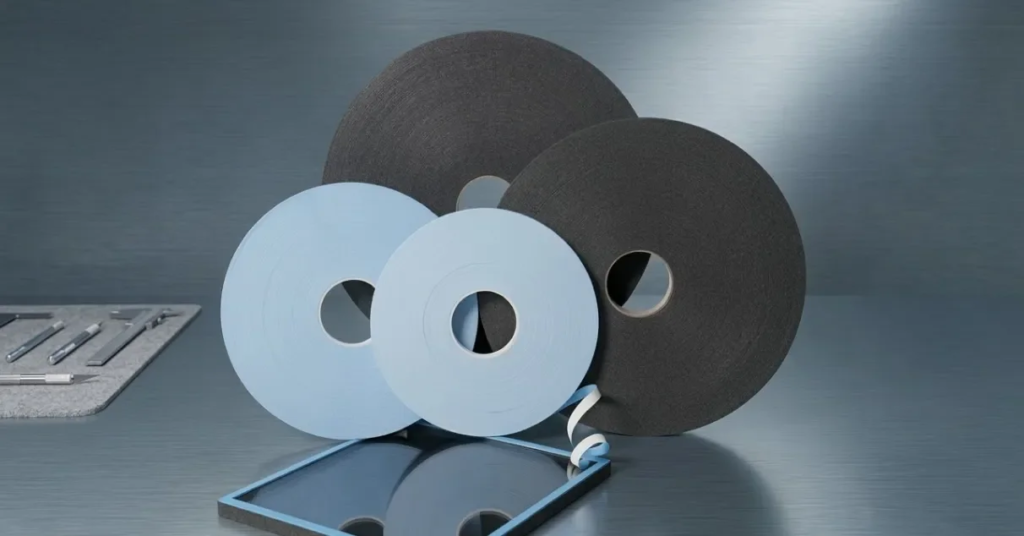
PE Foam Tape vs EPDM Foam Tape: Quick Comparison
| Feature | PE Foam Tape | EPDM Foam Tape |
|---|---|---|
| Base Material | Polyethylene Foam | EPDM Rubber Foam |
| Structure | Closed Cell | Closed Cell |
| UV Resistance | ★★☆☆☆ | ★★★★★ |
| Weather Resistance | ★★☆☆☆ | ★★★★★ |
| Water Resistance | ★★★★☆ | ★★★★★ |
| Compression Recovery | ★★★★☆ | ★★★★★ |
| Temperature Resistance | -20°C to 80°C | -40°C to 120°C |
| Indoor Applications | ★★★★★ | ★★★★☆ |
| Outdoor Applications | ★★☆☆☆ | ★★★★★ |
| Cost | Lower | Higher |
What Is PE Foam Tape?
PE Foam Tape is a closed-cell polyethylene foam tape designed for sealing, cushioning, insulation, and vibration damping applications. Its lightweight structure and excellent compressibility make it ideal for indoor industrial and commercial applications.
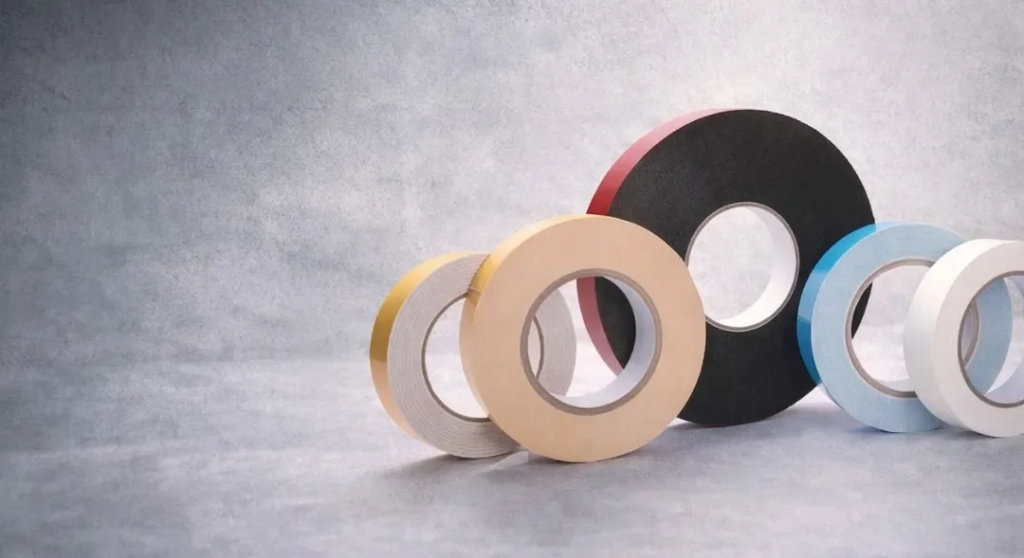
Key Features of PE Foam Tape
- Closed-cell polyethylene foam construction
- Excellent shock absorption
- Superior gap-filling capability
- Good thermal insulation
- Moisture-resistant structure
- Lightweight and flexible
Common Applications of PE Foam Tape
- Automotive interior trim mounting
- HVAC insulation
- Window glazing
- Appliance assembly
- Packaging protection
- Acoustic dampening
Advantages of PE Foam Tape
- Cost-effective
- Lightweight
- Easy to die-cut
- Excellent cushioning performance
- Good conformability
Limitations of PE Foam Tape
- Limited UV resistance
- Lower weather resistance
- Reduced outdoor durability
- Lower temperature resistance
What Is EPDM Foam Tape?
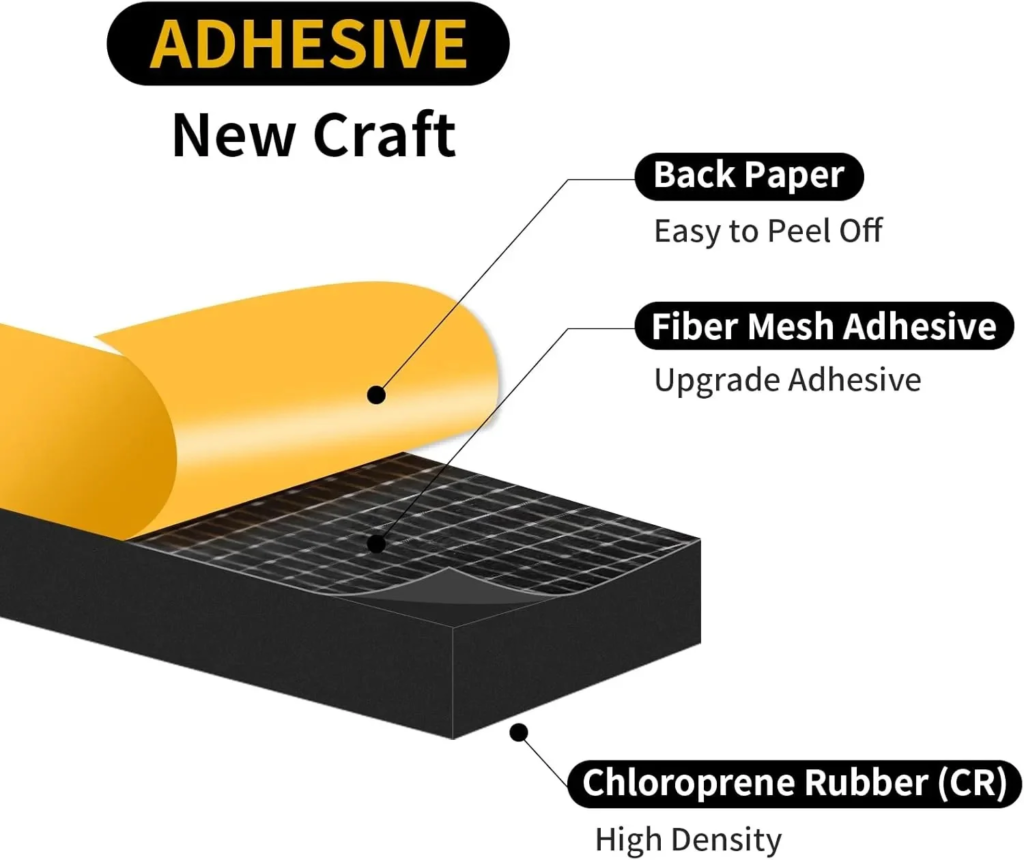
EPDM Foam Tape is manufactured from Ethylene Propylene Diene Monomer (EPDM) rubber foam. It is specifically engineered for outdoor sealing applications where UV resistance, ozone resistance, and long-term weatherability are required.
Key Features of EPDM Foam Tape
- Closed-cell EPDM rubber foam
- Superior elasticity
- Excellent compression recovery
- Outstanding weather resistance
- Long service life
- Excellent waterproof sealing
Common Applications of EPDM Foam Tape
- Automotive weatherstripping
- Roofing systems
- HVAC equipment
- Outdoor electrical enclosures
- Solar panel sealing
- Construction expansion joints
Advantages of EPDM Foam Tape
- Excellent UV resistance
- Outstanding weatherability
- Superior compression memory
- Long-term outdoor durability
- Excellent waterproof performance
Limitations of EPDM Foam Tape
- Higher material cost
- Heavier than PE foam
- Often unnecessary for indoor applications
PE Foam Tape vs EPDM Foam Tape: Key Differences
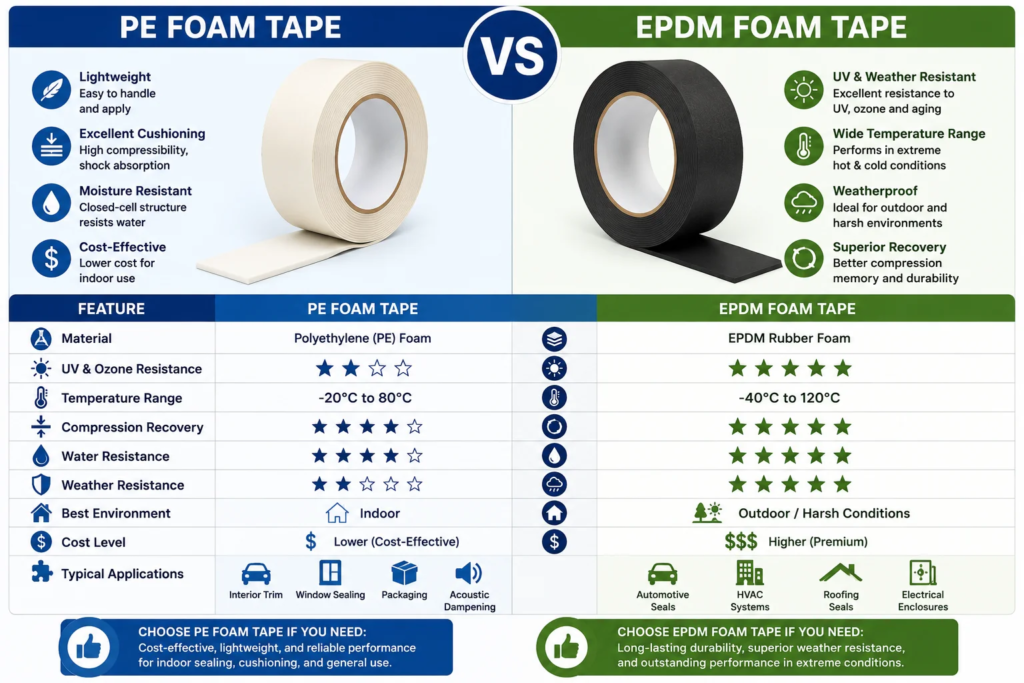
Material Structure
PE Foam Tape
- Polyethylene-based foam
- Lightweight
- Softer texture
- Easy to compress
EPDM Foam Tape
- Synthetic rubber foam
- Higher elasticity
- Better resilience
- Longer service life
UV and Weather Resistance
PE Foam Tape
Suitable for indoor applications but may deteriorate after prolonged UV exposure.
EPDM Foam Tape
Designed for outdoor environments and capable of withstanding years of UV exposure, ozone, rain, and temperature fluctuations.
Winner: EPDM Foam Tape
Compression Recovery
PE Foam Tape
Provides good compression performance but may develop compression set over time.
EPDM Foam Tape
Maintains shape and sealing performance even after repeated compression cycles.
Winner: EPDM Foam Tape
Temperature Resistance
| Material | Operating Temperature |
|---|---|
| PE Foam Tape | -20°C to 80°C |
| EPDM Foam Tape | -40°C to 120°C |
Winner: EPDM Foam Tape
Cost Comparison
| Item | PE Foam Tape | EPDM Foam Tape |
|---|---|---|
| Material Cost | Lower | Higher |
| Processing Cost | Lower | Moderate |
| Service Life | Moderate | Long |
| Outdoor Performance | Limited | Excellent |
Winner: PE Foam Tape (Cost Advantage)
Pros and Cons Comparison
PE Foam Tape Pros and Cons
Pros
- Lower cost
- Lightweight
- Excellent cushioning
- Easy die-cutting
- Good insulation
Cons
- Poor UV resistance
- Lower outdoor durability
- Limited temperature resistance
EPDM Foam Tape Pros and Cons
Pros
- Excellent UV resistance
- Outstanding weather resistance
- Superior compression recovery
- Long service life
- Excellent waterproof sealing
Cons
- Higher cost
- Heavier than PE foam
- Over-specified for many indoor applications
Which Foam Tape Should You Choose?
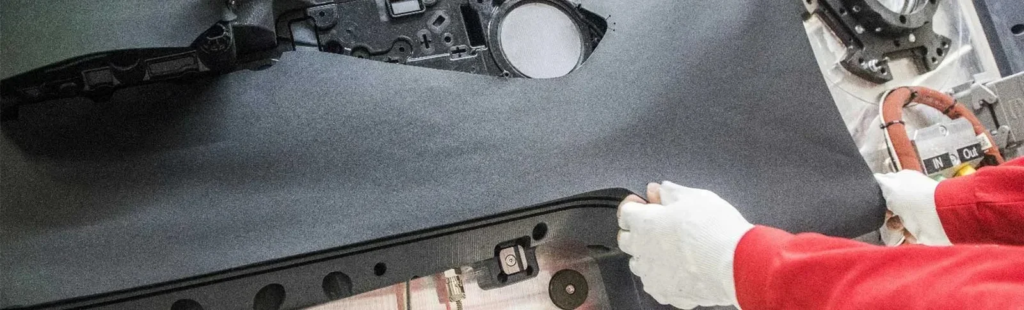
Choose PE Foam Tape If You Need
- Cost-effective sealing
- Indoor applications
- Cushioning and vibration damping
- Lightweight materials
- Packaging protection
Choose EPDM Foam Tape If You Need
- Outdoor sealing
- Weatherproof applications
- UV resistance
- Automotive weatherstripping
- Long-term waterproof sealing
Typical Applications of PE Foam Tape and EPDM Foam Tape
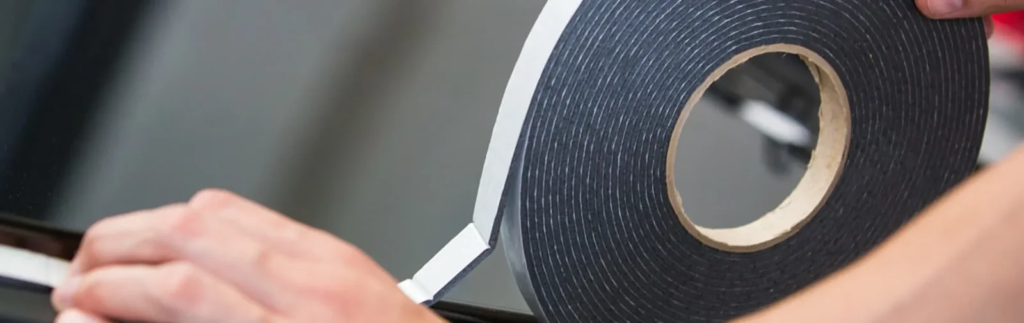
PE Foam Tape Applications
Construction
- Window glazing
- Interior insulation
- Door sealing
Automotive
- Interior trim mounting
- Noise reduction
- Anti-vibration pads
Packaging
- Product protection
- Cushioning inserts
EPDM Foam Tape Applications
Construction
- Curtain wall sealing
- Roofing systems
- Expansion joints
Automotive
- Door seals
- Window weatherstrips
- Exterior trim sealing
Industrial Equipment
- HVAC systems
- Outdoor electrical cabinets
- Solar energy installations
Frequently Asked Questions
Can PE Foam Tape Be Used Outdoors?
PE Foam Tape can be used for temporary outdoor applications. However, prolonged UV exposure may cause aging, cracking, and reduced sealing performance.
Which Tape Is Better for Soundproofing?
PE Foam Tape is generally preferred for indoor soundproofing because it provides excellent vibration damping at a lower cost.
Is EPDM Foam Tape Waterproof?
Yes. EPDM Foam Tape features a closed-cell structure that does not absorb water and can create a reliable waterproof and airtight seal when properly compressed.
Which Tape Lasts Longer Outdoors?
EPDM Foam Tape significantly outperforms PE Foam Tape in outdoor environments due to its superior UV resistance, ozone resistance, and weatherability.
Conclusion
Both PE Foam Tape and EPDM Foam Tape offer excellent sealing performance, but they are designed for different environments.
Choose PE Foam Tape When
- Cost is important
- Indoor use is required
- Cushioning and insulation are priorities
- Lightweight materials are preferred
Choose EPDM Foam Tape When
- Outdoor durability is critical
- UV resistance is required
- Long-term waterproof sealing is needed
- Extreme weather resistance is necessary
Selecting the right foam tape based on environmental conditions, performance requirements, and budget will ensure optimal sealing performance and longer service life.