
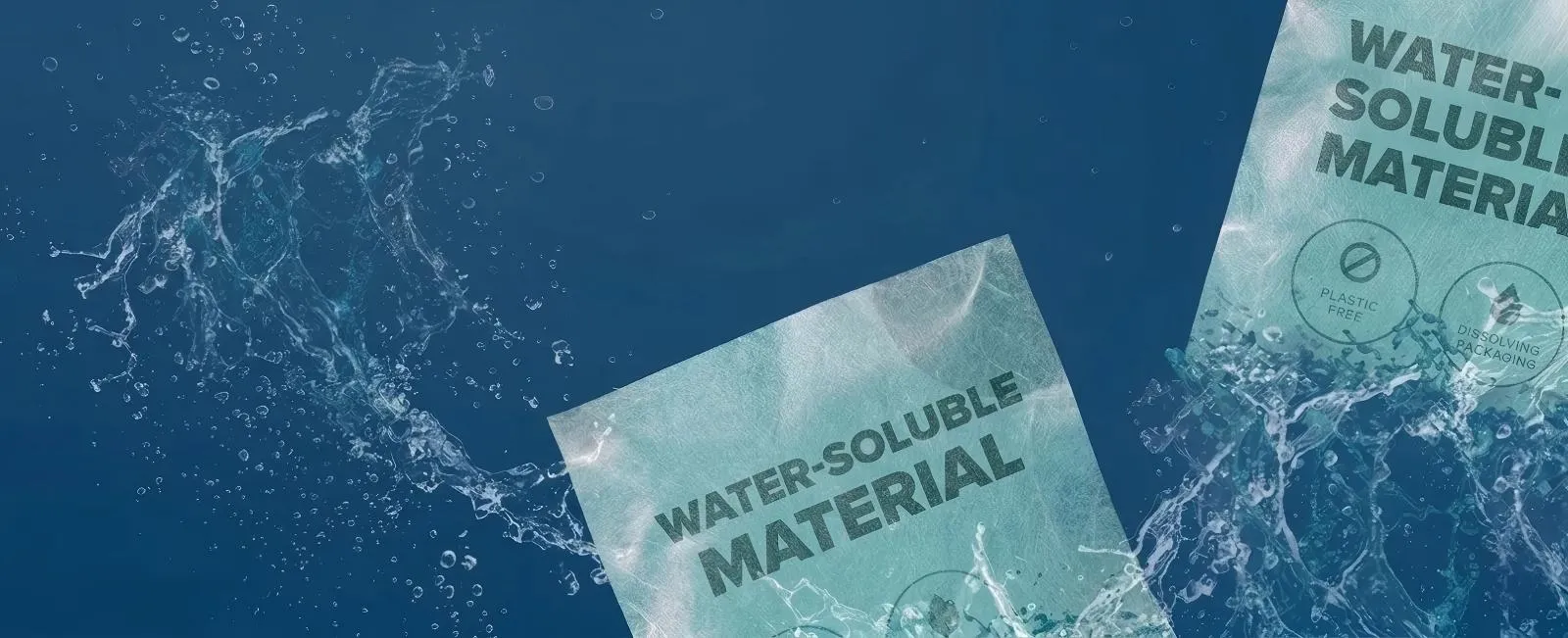
Water-soluble tape is an adhesive product designed to dissolve or disperse in water, leaving little to no residue. In packaging and identification applications, the most common form is a water soluble label, including water soluble stickers and water soluble adhesive labels.
These labels provide reliable adhesion during use and quick removal during washing or soaking, making them ideal for reusable containers, food preparation environments, laboratories, and temporary identification systems.
Video Demonstration
What Is a Water Soluble Label?
A water soluble label is a temporary identification label made from dissolvable film or paper combined with a water-dispersible adhesive. When exposed to water, both the face material and adhesive break down, allowing the label to be removed cleanly without scraping.
Common Applications
- Food containers
- Reusable trays
- Laboratory samples
- Medical equipment
- Manufacturing work-in-progress tracking
- Logistics and warehouse identification
Common Types of Water Soluble Products
Water soluble labels are often confused with dissolvable tapes. While both dissolve in water, they serve different purposes.
Water Soluble Labels
Best suited for:
- Product identification
- Barcode labels
- Batch tracking
- Date coding
- Inventory management
Examples:
- Water soluble stickers
- Water dissolvable stickers
- Water soluble adhesive labels
Water Soluble Tape
Best suited for:
- Masking
- Bundling
- Temporary holding
- Packaging applications
Examples:
- Dissolvable tape
- Soluble tape
- Aquasol tape
- Water soluble adhesive tape
Water Soluble Double Sided Tape
Best suited for:
- Temporary mounting
- Fixture positioning
- Assembly processes requiring water-release removal
Examples:
- Water soluble double sided tape
- Double sided water soluble tape
GMARK Pro Tip: Always determine whether your application requires a material that completely dissolves or one that disperses into particles. The correct choice depends on your cleaning process and operational requirements.
How Does a Water Soluble Label Work?
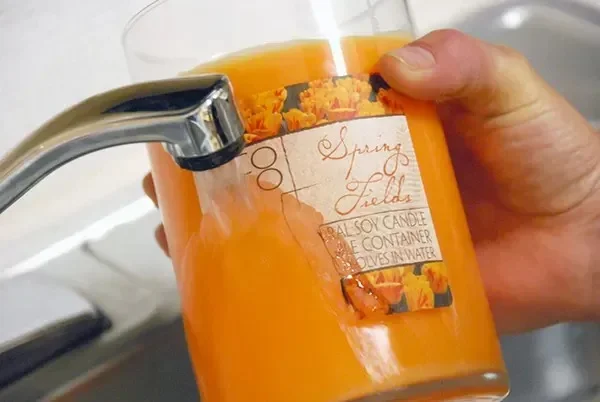
Water soluble labels combine a water-sensitive face stock with a specially engineered adhesive.
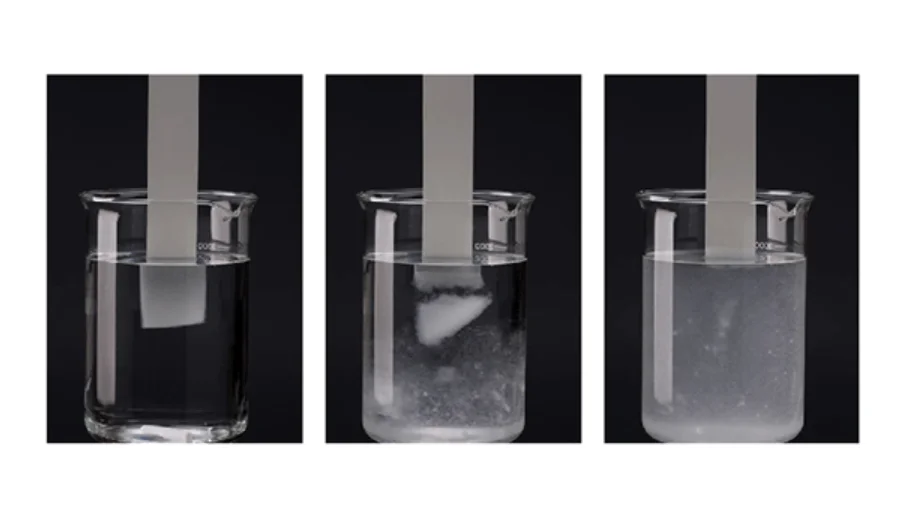
When exposed to water:
- The label absorbs water.
- The material begins to swell.
- The adhesive loses bond strength.
- The label releases from the surface.
- Remaining material dissolves or disperses.
Dissolution Process
| Step | Description |
|---|---|
| Application | Label adheres securely under dry conditions |
| Water Contact | Film absorbs moisture |
| Adhesive Breakdown | Adhesive disperses and loses tack |
| Release | Label detaches from the surface |
| Rinse Away | Remaining particles wash away |
GMARK Pro Tip: Always test labels under actual wash conditions. Water temperature, pressure, and soak time significantly influence performance.
Benefits of Water Soluble Labels
Water soluble labels eliminate the labor associated with scraping adhesive residue and removing conventional labels.
Key Advantages
Fast Removal
Labels dissolve quickly during washing.
Residue-Free Performance
Leaves surfaces clean after removal.
Improved Operational Efficiency
Reduces labor and cleaning time.
Better Hygiene
Ideal for food processing, healthcare, and laboratory environments.
Easy Traceability
Supports temporary batch, lot, and date coding.
How to Store and Maintain Water Soluble Labels
Proper storage is critical to preventing premature degradation.
Storage Guidelines
Keep Labels Dry
Store labels in sealed packaging.
Control Humidity
Avoid high-humidity environments and temperature fluctuations.
Apply to Clean Surfaces
Ensure surfaces are:
- Clean
- Dry
- Oil-free
Use Compatible Printing Systems
Verify compatibility with:
- Thermal transfer printers
- Laser printers
- Inkjet printers
Follow Recommended Removal Conditions
Use the specified:
- Water temperature
- Soak duration
- Rinse procedure
GMARK Pro Tip: Most application failures occur because labels are handled with wet hands or applied to damp surfaces.
What Is the Price of Water Soluble Labels?
Pricing depends on several factors, including material type, adhesive formulation, label size, printing requirements, and dissolution performance.
Although water soluble labels generally cost more than conventional paper labels, they often reduce total operational costs through labor savings and improved efficiency.
Main Cost Drivers
| Cost Factor | Impact on Price |
|---|---|
| PVA Film Material | Higher |
| Faster Dissolution Performance | Higher |
| Specialty Adhesive Systems | Higher |
| Custom Die-Cutting | Higher |
| Variable Data Printing | Higher |
| Compliance Requirements | Higher |
GMARK Pro Tip: Focus on total cost of ownership rather than label cost alone. Labor savings often outweigh material price differences.
Water Soluble Label vs Water Soluble Tape
Performance Comparison
| Product Type | Best Use | Printability | Dry Strength | Humidity Resistance | Removal Method |
|---|---|---|---|---|---|
| Water Soluble Label | Identification | High | Medium-High | Medium | Soak & Rinse |
| Water Dissolvable Stickers | Short-Term Labeling | High | Medium | Low-Medium | Quick Rinse |
| Water Soluble Adhesive Tape | Bundling & Masking | Low | Medium | Medium | Soak & Rinse |
| Water Soluble Double Sided Tape | Temporary Mounting | Low | Medium-High | Medium | Soak to Release |
| Specialty Soluble Tapes | Industrial Applications | Varies | Varies | Varies | Varies |
GMARK Pro Tip: Labels are designed to remain readable before dissolving. Tapes are designed primarily for holding and masking functions.
Buying Checklist
Before selecting a water soluble label, specify the following:
Application Surface
- Plastic
- Stainless steel
- Glass
- Painted surfaces
Environment
- Ambient humidity
- Condensation exposure
- Refrigeration or freezer use
Duration of Use
- Hours
- Days
- Weeks
Wash Conditions
- Water temperature
- Spray pressure
- Soak time
- Cleaning chemicals
Release Requirements
Examples:
- Remove within 30 seconds
- Dissolve completely within 3 minutes
Printing Requirements
- Thermal transfer
- Inkjet
- Laser printing
- Barcode compatibility
Residue Requirements
- Zero residue
- Low residue acceptable
Packaging Format
- Rolls
- Sheets
- Fan-fold packs
GMARK Pro Tip: Always conduct a small-scale production trial before large-volume purchasing.
Frequently Asked Questions
Are water soluble labels food safe?
Many water soluble labels are available with food-contact compliant materials. Always verify regulatory requirements with your supplier.
How quickly do water soluble labels dissolve?
Dissolution time varies depending on material type, adhesive formulation, water temperature, and agitation.
Can water soluble labels withstand refrigeration?
Yes. Specialized formulations can tolerate refrigerated environments while remaining removable during washing.
Are water soluble labels printable?
Yes. Most products support thermal transfer, laser, or inkjet printing.
Do water soluble labels leave residue?
Properly selected water soluble labels are designed to leave little or no residue after removal.
Conclusion
Water soluble labels provide a clean, efficient solution for temporary identification applications where easy removal is essential.
Compared with conventional labels, they offer:
- Faster removal
- Reduced residue
- Improved hygiene
- Lower labor costs
- Better operational efficiency
By selecting the appropriate label material, adhesive system, and dissolution speed, businesses can significantly improve reusable container management, food safety workflows, laboratory operations, and manufacturing efficiency.